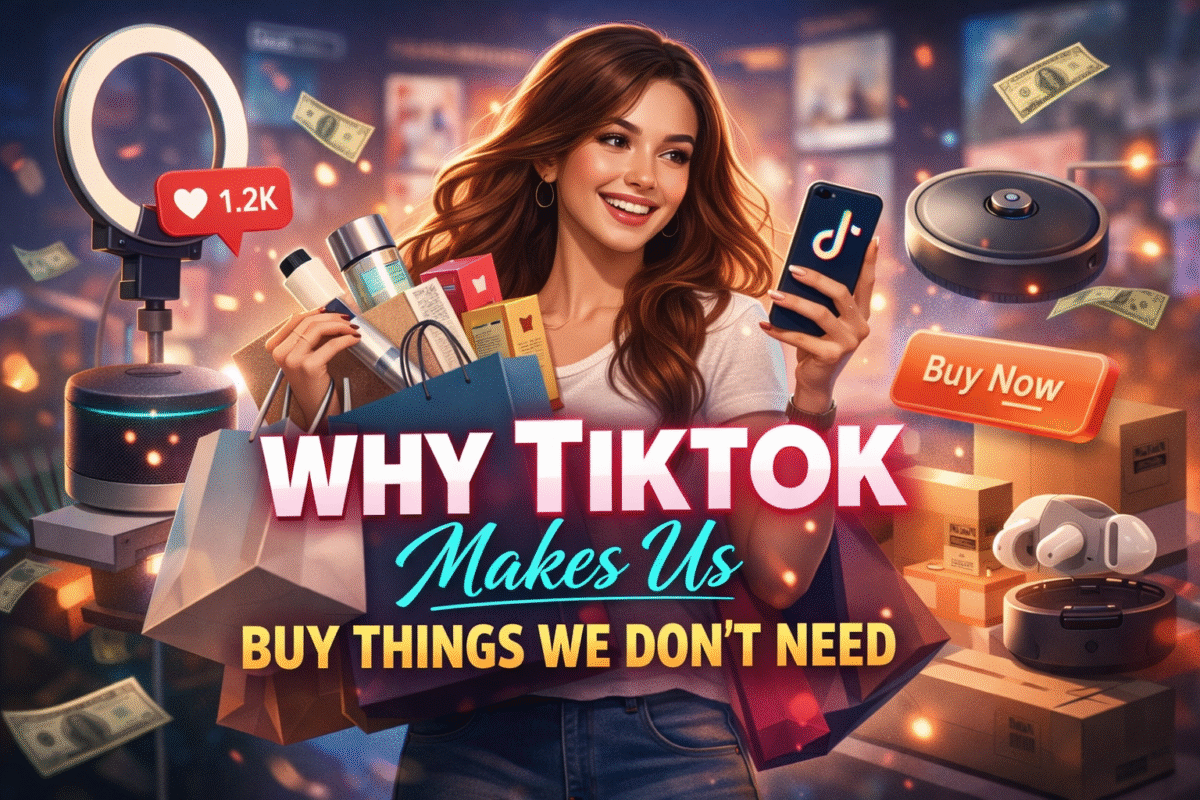
The psychology behind why TikTok makes us buy things we don’t need without realizing it
Why TikTok Makes Us Buy Things We Don’t Need (And Why It Works So Well)
The psychology behind why TikTok makes us buy things we don’t need without realizing it
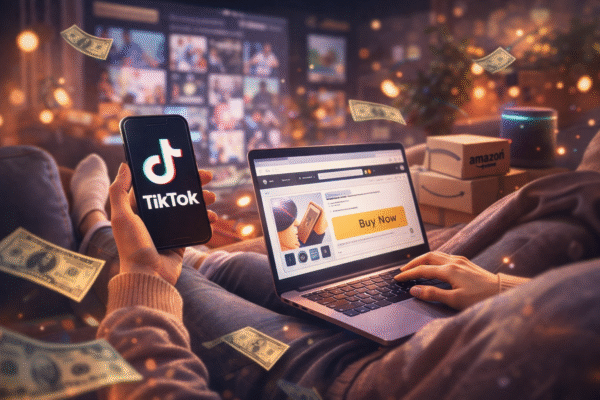
You didn’t plan to buy anything. You opened TikTok to relax, kill time, or distract yourself for a few minutes.
Yet somehow, thirty minutes later, you’re on Amazon looking at a product you’ve never searched for before.
This strange pattern isn’t coincidence — it’s the core reason why TikTok makes us buy things we don’t need.
TikTok isn’t just another social media platform. It’s a behavioral engine designed to influence attention,
emotion, and decision-making at a speed no previous app has achieved. Unlike traditional advertising,
TikTok doesn’t feel like selling — and that’s exactly why it works.
The brain decides before logic even enters the conversation.
Why TikTok Makes Us Buy Things We Don’t Need Feels So Natural
One of the biggest reasons why TikTok makes us buy things we don’t need is that it removes
every psychological signal that normally tells us “this is an ad.” There are no polished commercials,
no actors, no brand slogans shouting at you.
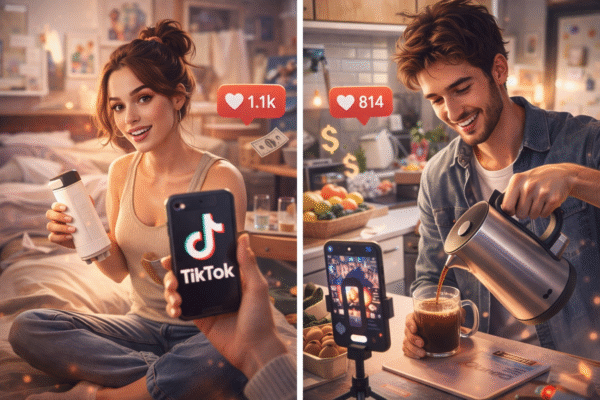
Instead, you see someone who looks like a regular person. Their room is messy. Their lighting isn’t perfect.
They talk casually, sometimes even awkwardly. That imperfection creates trust.
Your brain interprets this as peer-to-peer advice, not marketing. And advice from peers bypasses skepticism.
This is why TikTok conversions outperform traditional ads by a wide margin.
🧩 Psychological Trick at Play
When a product is framed as “something I discovered” instead of “something being sold,”
the brain lowers its defense systems automatically.
Dopamine Is the Real Product TikTok Sells
To understand why TikTok makes us buy things we don’t need, you need to understand dopamine.
TikTok is engineered as a reward loop: swipe, novelty, emotion, repeat.
When a product appears during a dopamine peak — a funny moment, a satisfying transformation,
or a relatable problem — your brain associates the product with that emotional reward.
Buying the product becomes a way to extend the feeling. The purchase feels good,
even before the product arrives. This is why many TikTok purchases end up unused.
The emotional reward already happened.
not actual utility.
Micro-Problems That Didn’t Exist Before the Video
Another major reason why TikTok makes us buy things we don’t need is its obsession
with highlighting micro-problems. Things you lived with for years suddenly feel inefficient,
ugly, or wrong.
A cable not aligned perfectly. A drawer not optimized. A morning routine not aesthetic enough.
TikTok introduces the problem and the solution in the same 30-second clip.
Because the problem is fresh and emotionally framed, the solution feels urgent.
Your brain skips the “do I actually need this?” phase.
The Algorithm Knows You Better Than You Think
Every pause, replay, comment, or share trains the algorithm. TikTok quickly learns
what type of products trigger your curiosity, your anxiety, or your desire to improve yourself.
Over time, your feed becomes a hyper-personalized shopping funnel — disguised as entertainment.
This personalization is the final reason why TikTok makes us buy things we don’t need
so consistently.
Key Takeaway
TikTok doesn’t force you to buy. It creates the emotional conditions where buying feels like your idea.
Why TikTok Makes Us Buy Things We Don’t Need Through “Relatable” Creators
One of the most underestimated reasons why TikTok makes us buy things we don’t need
is not the platform itself — it’s the creators. Not influencers in the traditional sense,
but everyday people who feel authentic, unpolished, and emotionally familiar.
TikTok creators don’t sell products the way ads do. They sell experiences, frustrations,
routines, and small life upgrades. The product just happens to be inside the story.
We buy what they appear to genuinely use.
Relatability Converts Better Than Authority
Traditional marketing relies on authority: experts, celebrities, or polished brands.
TikTok flips this completely. A creator with 5,000 followers lying on their bed at midnight
can outperform a million-dollar campaign.
This is a core mechanism why TikTok makes us buy things we don’t need:
relatability creates emotional alignment. When someone feels “like us,”
their choices feel safer to copy.
The brain interprets this as social proof, not persuasion.
It’s the same psychological effect that drives trends, fashion cycles,
and viral gadgets.
Why this matters for buyers
We lower our critical thinking when advice comes from someone we emotionally identify with.
“TikTok Made Me Buy It” Is a Social Signal
The phrase “TikTok made me buy it” is not a joke — it’s a behavioral cue.
It removes personal responsibility and reframes the purchase as a cultural moment.
This is another layer why TikTok makes us buy things we don’t need.
The decision feels collective, not individual. Buying becomes participation.
This is especially visible in trending gadgets, smart home tools,
and AI-powered products that promise efficiency or comfort.
You can see this clearly in posts like
AI-powered Amazon gadgets trending right now
,
where novelty and usefulness blend seamlessly.
Short Videos Remove the “Time to Think”
TikTok’s short-form format doesn’t give the brain enough time to analyze.
By the time logic tries to intervene, the emotional decision is already made.
This explains why TikTok makes us buy things we don’t need
even when we consider ourselves rational shoppers.
The format is optimized for speed, not reflection.
Compare this to reading long reviews or comparison articles.
TikTok compresses discovery, validation, and desire into seconds.
Faster decisions = lower perceived risk = higher impulse buying.
Why These Purchases Feel Logical in the Moment
TikTok content often frames products as solutions to productivity,
mental health, comfort, or self-improvement.
These are emotionally loaded categories.
This overlaps with trends like AI sleep tools, smart home gadgets,
and automation devices — topics already explored in
AI sleep gadgets people are buying in 2025
.
When a product promises better rest, focus, or organization,
the brain categorizes it as “investment,” not consumption.
That’s another reason why TikTok makes us buy things we don’t need.
Section takeaway
TikTok creators don’t push products — they normalize buying as self-care,
optimization, or belonging.
About the Author
This article was written by the editorial team at Made Me Buy It Now,
a digital publication focused on consumer psychology, viral products,
and how social media platforms influence modern buying behavior.
Our content analyzes trends across TikTok, Amazon, and emerging tech,
helping readers understand not just what they buy,
but why they buy it.
Why TikTok Makes Us Buy Things We Don’t Need by Blurring Identity and Consumption
One of the deepest — and least discussed — reasons why TikTok makes us buy things we don’t need
is the way the platform quietly merges identity with consumption.
On TikTok, buying is no longer just about owning something.
It becomes a statement about who we are, what we value, and how we live.
Unlike traditional e-commerce, TikTok doesn’t ask users:
“Do you need this?”
It asks something far more powerful:
“Does this feel like you?”
When a product aligns with a lifestyle, aesthetic, or mindset we admire,
the purchase feels emotionally justified — even when the utility is questionable.
This is a central reason why TikTok makes us buy things we don’t need
while still feeling smart, intentional, and even responsible.
Identity-based buying explained
We are no longer buying products.
We are buying alignment with a version of ourselves we want to become.
TikTok Turns Products Into Personal Narratives
On TikTok, products are rarely presented as objects.
They are framed as solutions to personal stories:
burnout, lack of focus, anxiety at home, poor sleep,
or feeling overwhelmed by modern life.
This storytelling approach explains why TikTok makes us buy things we don’t need
even when we already own similar items.
The product isn’t replacing something broken —
it’s promising a better version of daily life.
This is especially visible in tech and smart home content.
Many of these narratives overlap with themes explored in
technology anxiety at home
and
smart home mental overload
,
where convenience and stress reduction are emotionally intertwined.
The more personal the narrative feels,
the harder it becomes to separate desire from necessity.
Aesthetic Consistency Creates Buying Pressure
TikTok’s visual culture encourages consistency:
similar colors, moods, routines, and setups.
When users see creators with curated spaces,
minimal desks, calming bedrooms, or “productive mornings,”
products become visual requirements to maintain that image.
This subtle pressure reinforces why TikTok makes us buy things we don’t need.
The purchase feels less like an impulse
and more like completing a visual or lifestyle puzzle.
Over time, this leads to repeated micro-purchases:
lights, organizers, gadgets, AI tools, and accessories
that individually seem harmless,
but collectively shape consumption habits.
TikTok doesn’t force spending — it normalizes constant upgrading.
The Illusion of “Smart” Consumption
Another reason why TikTok makes us buy things we don’t need
is the platform’s emphasis on optimization.
Products are framed as tools to save time, money, energy, or mental effort.
When consumption is framed as optimization,
spending feels logical — even responsible.
This is why AI-powered devices, productivity tools,
and smart gadgets perform so well on TikTok.
You can see this logic reflected in guides like
how to choose smart home gadgets
and
how smart home gadgets are tested
,
where the line between necessity and enhancement is intentionally thin.
TikTok amplifies this effect by showing only positive outcomes —
rarely long-term dissatisfaction or redundancy.
Follow Us for More Insights
We break down viral trends, buying psychology,
and the hidden forces behind modern consumption.
Why Awareness Doesn’t Always Stop the Purchase
Even when users understand why TikTok makes us buy things we don’t need,
awareness alone doesn’t eliminate the behavior.
That’s because TikTok purchasing is emotional,
contextual, and identity-driven — not purely rational.
The platform creates a feedback loop:
discover → relate → desire → purchase → justify.
Each step feels reasonable in isolation,
making the overall behavior difficult to interrupt.
This doesn’t mean TikTok is inherently harmful —
but it does mean modern consumers must develop
stronger awareness of how digital environments shape decisions.
Why TikTok Makes Us Buy Things We Don’t Need Through Emotional Timing
Another powerful reason why TikTok makes us buy things we don’t need
has nothing to do with the product itself — and everything to do with timing.
TikTok doesn’t just show content randomly.
It delivers buying triggers when users are emotionally vulnerable.
Most TikTok sessions happen during moments of low resistance:
late at night, after work, during stress, boredom, or mental fatigue.
In those moments, decision-making becomes emotional rather than analytical.
This explains why TikTok makes us buy things we don’t need
even when we normally consider ourselves disciplined or rational consumers.
The platform meets users exactly when their cognitive defenses are down.
TikTok doesn’t create desire — it activates it at the perfect moment.
Dopamine Loops and Micro-Rewards
TikTok is built around short dopamine loops.
Every swipe promises novelty, validation, or relief from boredom.
When a product appears inside this loop,
the brain associates buying with reward.
This neurological pairing is central to why TikTok makes us buy things we don’t need.
The act of purchasing becomes emotionally linked
to the same satisfaction as watching another video.
Unlike traditional ads that interrupt content,
TikTok embeds products inside entertainment.
This removes friction and lowers skepticism.
Over time, users unconsciously associate:
scrolling → discovery → pleasure → purchase.
The product feels like part of the experience,
not a separate commercial decision.
Social Proof at Algorithmic Scale
Social proof has always influenced buying,
but TikTok scales it in unprecedented ways.
When thousands of creators showcase the same item,
it feels culturally validated.
This collective validation reinforces why TikTok makes us buy things we don’t need.
The product no longer feels optional —
it feels inevitable.
Comments like “I bought it too,”
“This changed my life,”
or “Worth every penny”
amplify perceived value,
even when long-term usefulness is unclear.
TikTok’s algorithm prioritizes engagement,
not satisfaction.
This means products that generate excitement
are promoted more than products that last.
Why this matters
Popularity on TikTok does not equal necessity —
but the platform blurs that distinction.
The Fear of Missing Out on “Small Wins”
Many TikTok purchases are framed as low-risk:
inexpensive gadgets, organizers, accessories, or tools.
This creates the illusion of a “small win.”
This framing is another reason why TikTok makes us buy things we don’t need.
The cost feels negligible,
but the emotional payoff feels immediate.
Users are not chasing utility —
they are chasing relief, excitement, or a sense of progress.
Each purchase feels like a tiny improvement to daily life.
Over time, these small wins accumulate into clutter,
decision fatigue, and financial leakage —
outcomes rarely shown on TikTok itself.
Why TikTok Buying Feels Personal, Not Commercial
Traditional advertising is impersonal.
TikTok feels intimate.
Creators speak directly to the camera,
share personal routines,
and integrate products into real moments.
This intimacy strengthens why TikTok makes us buy things we don’t need.
The recommendation feels like advice from a friend,
not a sales pitch.
When trust replaces skepticism,
buying decisions become emotional agreements
rather than calculated transactions.
Section takeaway
TikTok succeeds at selling because it understands
when, how, and why people are most likely to say yes.
How to Use TikTok Without Falling Into Unnecessary Buying Traps
Understanding why TikTok makes us buy things we don’t need
is the first step toward regaining control.
The goal is not to quit TikTok,
but to use it consciously instead of reactively.
TikTok is a powerful discovery engine,
but without awareness,
it becomes an impulse amplifier.
Once users recognize the psychological patterns,
buying decisions slow down naturally.
Rule #1: Delay Every TikTok Purchase
If you see a product on TikTok,
wait 48 hours before buying.
Most unnecessary desires fade quickly once the dopamine spike passes.
This delay directly counters why TikTok makes us buy things we don’t need.
The algorithm thrives on immediacy.
Time restores rational evaluation.
Ask the One Question TikTok Avoids
TikTok content focuses on transformation,
not longevity.
Before purchasing, ask:
Will this still matter to me in 30 days?
This question exposes why TikTok makes us buy things we don’t need
by separating novelty from necessity.
Most viral gadgets solve momentary inconvenience,
not long-term problems.
For deeper product evaluation,
compare TikTok recommendations with structured reviews like:
Curate Your Algorithm Intentionally
TikTok shows you what you interact with.
Liking, saving, or watching buying content to the end
reinforces the very cycle behind why TikTok makes us buy things we don’t need.
To reduce impulse triggers:
- Scroll past product videos quickly
- Search informational content instead of hauls
- Follow creators who analyze, not promote
Over time, the algorithm adapts.
Your feed becomes less transactional
and more intentional.
Related reading
Final Thought: Awareness Is the Real Upgrade
TikTok is not the enemy.
The lack of awareness is.
Once users understand why TikTok makes us buy things we don’t need,
impulse loses its power.
The most valuable upgrade is not another gadget —
it’s intentional consumption.
TikTok can inspire discovery,
but choice should always remain yours.
About the Author
This article was written by the editor of MadeMeBuyItNow,
a platform dedicated to analyzing viral products, smart home technology,
and the psychology behind online buying behavior.
Our goal is to help readers make smarter decisions
before clicking “Buy Now.”
🔥 Join 120,000+ Smart Shoppers!
Get exclusive gadget deals, viral Amazon finds and tech reviews before they trend. Only the best — straight to your inbox every week 🚀