Technology Anxiety at Home: The Hidden Stress of Living With Smart Devices.
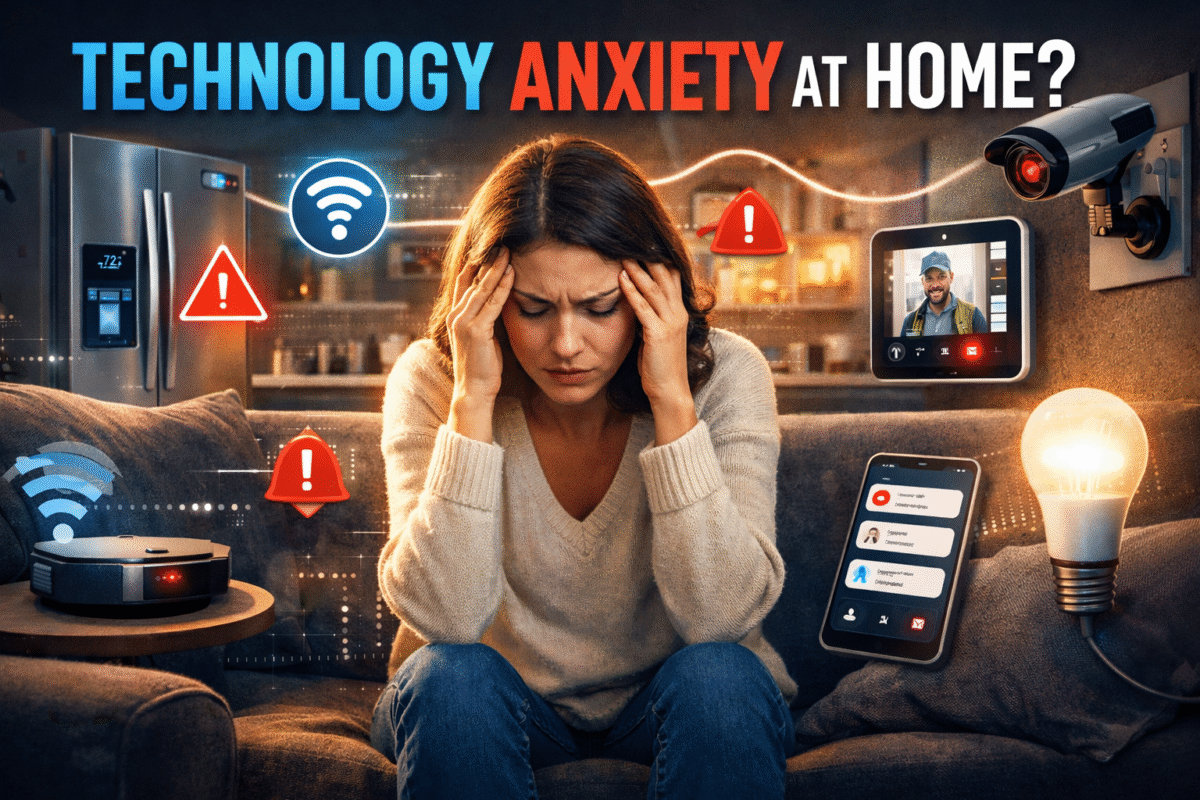
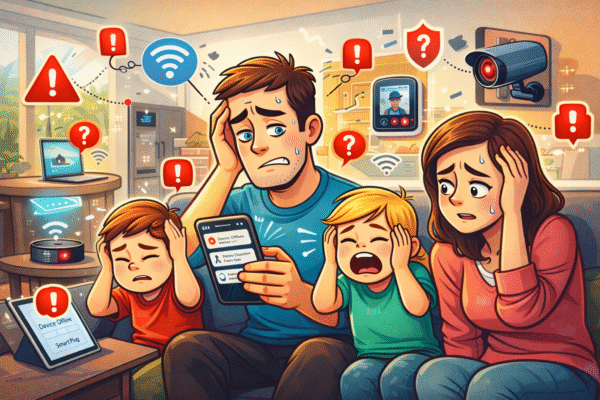
Technology anxiety at home is becoming one of the most common — and least talked about — side effects of modern living. While smart devices promise comfort, efficiency, and control, many households are quietly experiencing the opposite: stress, overload, and constant mental fatigue.
This isn’t about hating technology. It’s about understanding how the growing presence of connected devices inside our homes affects our emotions, focus, and sense of calm.
What Is Technology Anxiety at Home?
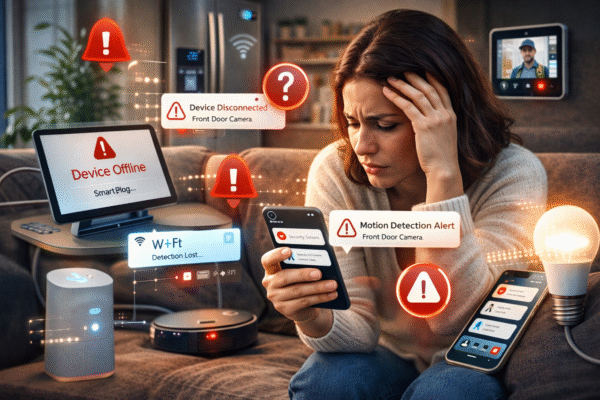
Technology anxiety at home refers to the mental and emotional stress caused by living in an environment filled with connected devices, notifications, automations, and digital decisions.
Unlike workplace tech stress, this anxiety happens in the place that should feel safest: your home.
It often shows up as:
- A constant feeling of being “on alert”
- Stress when devices malfunction or disconnect
- Overwhelm from too many apps and controls
- Guilt for not using devices “properly”
Why Smart Homes Can Increase Anxiety
Smart technology adds layers of invisible complexity to daily life. Each device introduces settings, updates, permissions, alerts, and decisions — even when we don’t consciously notice them.
Instead of simplifying life, poorly integrated smart homes can quietly increase cognitive load.
1. Constant Notifications
Alerts, reminders, low-battery warnings, connection errors — even when minor, they pull attention and create low-level stress.
2. Loss of Control
When a device doesn’t respond as expected, it creates frustration. Over time, this can lead to anxiety about relying on technology at all.
3. Decision Fatigue
Choosing modes, scenes, automations, and settings adds mental effort to everyday tasks that used to be simple.
The Psychological Side Nobody Talks About
Homes used to be places of rest. Today, they are systems that require management.
Many people feel pressure to:
- Optimize everything
- Keep devices updated
- Justify purchases by constant use
This pressure silently turns convenience into obligation.
Technology Anxiety vs. Technology Awareness
Not all concern is bad. Awareness helps us choose better tools. Anxiety, however, appears when technology stops serving us and starts demanding attention.
The key difference is intentional use.
Related Reading: Real Smart Home Experiences
When Smart Devices Create Mental Noise
Even simple devices can add mental clutter when too many coexist without a clear purpose.
For example, everyday household tech like smart waste solutions or kitchen devices can either reduce friction — or quietly add complexity.
Related Smart Home Reads
How to Reduce Technology Anxiety at Home
Reducing technology anxiety doesn’t require abandoning smart devices — it requires redefining their role.
1. Remove What You Don’t Trust
If a device causes more stress than value, it doesn’t belong in your home.
2. Limit Notifications Ruthlessly
Silence anything that isn’t urgent. Your attention is a resource.
3. Design for Calm, Not Optimization
Your home doesn’t need to be the most efficient — it needs to feel peaceful.
Choosing Simpler Technology on Purpose
Many people are now choosing fewer, better-integrated devices instead of maximum automation.
This shift isn’t anti-tech — it’s pro-human.
Explore More Thoughtful Tech Content
Final Thoughts: A Home Should Feel Safe
Technology anxiety at home is real — but it’s also reversible.
When devices serve clear purposes, respect your attention, and align with your lifestyle, technology fades into the background — exactly where it belongs.
Your home should support your life, not manage it.
Follow Made Me Buy It Now
Join our community for honest tech experiences, calm smart homes, and real-life reviews.
The Real Causes of Technology Anxiety at Home (Beyond Notifications)
Technology anxiety at home rarely comes from a single device or app. It is the result of accumulated friction — small, repeated moments where technology interrupts instead of supports daily life.
This section explores the deeper causes behind that tension, focusing on behavioral patterns, cognitive overload, and design choices that slowly transform convenience into stress.
1. Cognitive Overload in Domestic Spaces
Homes were never designed to function like control centers. Yet modern smart homes demand constant micro-decisions: adjusting settings, choosing modes, responding to alerts, troubleshooting connectivity issues.
Each of these actions consumes mental energy. Individually, they feel insignificant. Collectively, they create cognitive overload — a state where the brain remains partially engaged even during rest.
This is one of the core drivers of technology anxiety at home.
Unlike work-related stress, this overload follows you into spaces meant for recovery, reducing emotional decompression and increasing irritability.
2. Invisible Complexity and Mental Friction
One of the most underestimated stressors in smart environments is invisible complexity.
When technology works seamlessly, it disappears. When it fails silently or behaves unpredictably, it creates uncertainty — a powerful anxiety trigger.
Examples include:
- Devices that occasionally disconnect without explanation
- Automations that behave inconsistently
- Apps that change interfaces after updates
- Features that require constant reconfiguration
This unpredictability prevents trust from forming between user and device. Without trust, every interaction carries low-level tension.
3. The Pressure to Optimize Everything
Smart technology often comes with an unspoken expectation: optimization.
Homes are subtly reframed as systems that should be improved, measured, and perfected. Energy usage, cleanliness, efficiency, automation — all become metrics.
For many users, this creates a constant feeling of “not doing enough” with their devices.
This pressure is not technical — it is psychological.
Technology anxiety at home intensifies when people feel judged by their own tools.
4. Fragmented Control Across Multiple Ecosystems
Another major contributor is fragmentation.
Many households rely on devices from different brands, each with its own app, interface, logic, and update cycle.
Instead of a unified experience, users manage parallel systems that rarely communicate perfectly.
This fragmentation leads to:
- Increased learning curves
- Repeated setup processes
- Conflicting notifications
- Reduced sense of mastery
When control feels scattered, anxiety increases.
5. Emotional Fatigue From Constant Adaptation
Technology evolves faster than human habits.
Updates, new features, discontinued support, and shifting standards force users to adapt continuously — even if they never asked for change.
This constant adaptation creates emotional fatigue, especially in environments meant to feel stable.
Over time, users may experience resistance, frustration, or avoidance — classic signs of anxiety-related behavior.
Insight From Real Testing
Through hands-on testing of smart home devices, one pattern appears consistently: users tolerate complexity at work, but reject it at home. Comfort spaces have lower tolerance for friction.
6. When Automation Reduces Agency
Automation is designed to reduce effort — but excessive automation can remove a sense of control.
When actions happen without clear triggers or understanding, users feel disconnected from their own environment.
This loss of agency can manifest as anxiety, especially when systems override personal routines.
The issue is not automation itself — it is automation without transparency.
7. The Emotional Weight of “Smart Failure”
When traditional tools fail, we accept it. When smart tools fail, we internalize it.
Many users interpret device failure as personal failure:
- “I didn’t set it up correctly.”
- “I should understand this better.”
- “Maybe I bought the wrong thing.”
This emotional self-blame deepens technology anxiety at home and discourages experimentation.
8. How Home Technology Changes Behavior
Technology shapes behavior, not just convenience.
People begin checking apps instead of environments, relying on metrics instead of intuition, and responding to alerts instead of needs.
This behavioral shift subtly disconnects users from their physical space — another driver of discomfort.
9. Why Simpler Homes Often Feel Better
Studies in environmental psychology consistently show that perceived simplicity reduces stress.
Homes with fewer points of interaction, clearer cause-and-effect relationships, and predictable systems promote emotional regulation.
This explains why many users report feeling calmer after removing or simplifying smart setups.
Related Smart Home Perspectives
10. Recognizing Early Signs of Technology Anxiety
Awareness is the first step to change.
Common early signs include:
- Avoiding device settings
- Ignoring notifications
- Feeling relief when devices are unplugged
- Frustration disproportionate to the problem
These reactions signal misalignment between technology and lifestyle.
Why This Matters for Long-Term Wellbeing
Technology anxiety at home is not a flaw — it is feedback.
It signals that tools meant to assist are demanding too much attention.
Understanding these causes allows users to redesign their environment intentionally — restoring calm, trust, and emotional balance.
How Smart Home Gadgets Are Tested Before Being Recommended
Technology anxiety at home often increases when recommendations feel generic, rushed, or driven by hype. That is why every device discussed on this site follows a structured, real-world testing process designed to reflect everyday living conditions — not ideal lab scenarios.
This section explains the exact methodology used to evaluate smart home gadgets, focusing on transparency, experience, and user-centered decision-making.
A Real-World Testing Philosophy (Not Influencer Reviews)
Many online reviews prioritize speed, trends, or affiliate incentives. This approach does the opposite.
The goal is not to promote the newest gadget, but to determine whether a device genuinely improves daily life without increasing mental load.
Each smart home product is evaluated using three core principles:
- Usability over novelty
- Emotional impact over features
- Long-term reliability over first impressions
This philosophy directly supports lower technology anxiety at home.
Phase 1: Setup Experience and First Friction
The first interaction with a device sets the emotional tone.
During setup, several factors are observed carefully:
- Clarity of instructions
- Time required to become operational
- Number of required apps or accounts
- Error handling during installation
Any confusion during this phase is documented, because early frustration often predicts long-term dissatisfaction.
Why Setup Matters
Devices that cause friction before the first successful use tend to generate anxiety later. A smooth setup builds trust — a critical emotional foundation for home technology.
Phase 2: Daily Interaction and Habit Integration
After installation, the device is used naturally within existing routines.
No artificial testing schedules. No exaggerated usage.
This phase evaluates:
- How often the device demands attention
- Whether it interrupts or supports routines
- How intuitive interactions feel after initial learning
Smart technology should disappear into the background — not compete for attention.
If a device requires frequent manual correction, repeated app checks, or constant monitoring, it is flagged as mentally demanding.
Phase 3: Consistency, Reliability, and Trust
Consistency is one of the most underestimated factors in smart home satisfaction.
A device that works 95% of the time creates more anxiety than one that works 100% of the time with fewer features.
Testing during this phase focuses on:
- Connection stability
- Response time consistency
- Behavior after updates
- Error recovery
Trust is built when users stop anticipating failure.
Phase 4: Emotional Impact Assessment
Most reviews ignore emotional response. This process does not.
During extended use, attention is paid to:
- Stress levels during interaction
- Relief or frustration after task completion
- Behavioral changes caused by the device
If a product increases checking behavior, alert anxiety, or dependency, it fails this phase.
Phase 5: Long-Term Value vs Cognitive Cost
Every device introduces a trade-off.
The question is not “What does it do?” but “What does it demand in return?”
This phase compares:
- Convenience gained
- Time saved
- Mental energy consumed
Devices with high cognitive cost are not recommended — even if they perform well technically.
Related Evaluation Frameworks
Why This Method Reduces Technology Anxiety at Home
Devices selected using this framework share common traits:
- Minimal intervention required
- Predictable behavior
- Clear cause-and-effect interactions
- Respect for user routines
This alignment reduces mental friction and restores a sense of control.
Transparency, Independence, and Editorial Integrity
No manufacturer controls what appears on this site.
Recommendations are not influenced by sponsorship pressure, launch cycles, or brand relationships.
When affiliate links are used, they do not alter conclusions — only support site sustainability.
This transparency is essential for trust.
Experience-Based Expertise.
Expertise is demonstrated through repetition, comparison, and long-term observation.
Rather than isolated reviews, patterns emerge across dozens of tested devices.
This allows deeper insights into:
- Design trends that increase stress
- Interface choices that reduce anxiety
- Automation strategies that respect autonomy
How This Helps Readers Make Better Decisions
Readers are not expected to become experts.
The goal is to translate complexity into clarity.
By understanding how devices behave emotionally — not just technically — users can make confident decisions that support calmer living.
From Evaluation to Intention
Technology anxiety at home is not solved by buying more devices.
It is solved by choosing fewer, better-aligned tools.
This evaluation framework exists to support that intention — replacing overwhelm with trust, and noise with balance.
About the Author
MadeMeBuyItNow Editorial Team specializes in testing consumer technology with a focus on real-world usability, emotional impact, and long-term value. Every review is built on hands-on evaluation, behavioral observation, and practical experience — not trends or hype.
How to Reduce Technology Anxiety at Home with Smarter Device Choices.
Technology anxiety at home does not come from technology itself — it comes from poorly integrated technology. When smart devices demand attention, interrupt routines, or behave unpredictably, they create cognitive overload instead of convenience.
This section focuses on actionable strategies that reduce technology anxiety at home by aligning smart devices with human behavior, not the other way around.
1. Limit the Number of Active Smart Systems
One of the fastest ways to increase technology anxiety at home is running too many disconnected systems.
Each additional app, dashboard, or ecosystem increases:
- Decision fatigue
- Notification overload
- Maintenance responsibility
A calmer smart home is not the one with the most devices — it is the one with the fewest points of control.
Practical Rule
If a device requires its own app and cannot integrate smoothly with your existing system, it likely increases technology anxiety at home rather than reducing it.
2. Prioritize Devices That Reduce Decisions
Technology anxiety at home increases when devices ask questions instead of answering them.
High-anxiety devices typically:
- Require frequent manual confirmation
- Offer too many modes without clear defaults
- Send unnecessary alerts
Low-anxiety devices behave predictably and quietly.
The goal is not automation — it is decision elimination.
If a smart device removes one daily decision without introducing new ones, it actively reduces technology anxiety at home.
3. Use Smart Devices as Background Infrastructure
Technology anxiety at home often appears when devices become the center of attention.
Well-integrated smart technology behaves like electricity or plumbing — essential, invisible, and reliable.
Devices should:
- Operate without constant monitoring
- Require minimal interaction after setup
- Fail gracefully when issues occur
When technology fades into the background, anxiety follows.
Related Reading
4. Choose Reliability Over Innovation
New features are exciting — but reliability is calming.
Technology anxiety at home increases when users anticipate failure.
Devices with fewer features but higher consistency often outperform advanced devices emotionally.
Before adding a new gadget, ask:
- Does this solve an existing problem?
- Has this technology matured?
- Will updates improve or disrupt it?
Predictability builds trust. Trust reduces technology anxiety at home.
5. Centralize Control When Possible
Multiple control points fragment attention.
Centralizing smart home management reduces:
- Learning curves
- Error probability
- Context switching
A single, familiar interface allows users to regain a sense of control — a key factor in reducing technology anxiety at home.
Smart Home Control Examples
6. Reduce Notifications Aggressively
Notifications are one of the biggest contributors to technology anxiety at home.
Most smart devices over-notify by default.
Best practice:
- Disable non-critical alerts
- Keep only failure notifications
- Remove marketing or “usage summary” messages
Silence is not absence — it is peace.
7. Design for Calm, Not Control
Many smart homes fail because they prioritize control instead of comfort.
Technology anxiety at home decreases when users feel supported, not monitored.
Ask yourself:
- Does this device make me feel watched?
- Does it require frequent correction?
- Does it add pressure to optimize?
If the answer is yes, it likely increases anxiety.
8. Build Intentional Tech-Free Zones
Not every room needs smart technology.
Intentional absence of devices restores balance.
Bedrooms, relaxation areas, and creative spaces benefit from reduced automation.
This boundary-setting directly lowers technology anxiety at home by preserving mental rest.
9. Re-evaluate Devices Quarterly
Technology evolves — but so do habits.
Every few months, ask:
- Is this device still useful?
- Does it still reduce effort?
- Has it introduced new stress?
Removing a device can be as powerful as adding one.
Explore Calm-First Smart Tech
Technology Anxiety at Home Is a Design Problem — Not a Personal Failure
Feeling overwhelmed by smart technology does not mean you are “bad with tech.”
It means the technology was not designed with human limits in mind.
Reducing technology anxiety at home requires intentional choices, not constant upgrades.
The smartest homes are not the most connected — they are the most considerate.
Final Thoughts: Technology Anxiety at Home Is Optional — Not Inevitable
Technology anxiety at home has become one of the most overlooked side effects of modern living. As homes become more connected, many people feel less in control instead of more empowered.
The problem is not smart technology itself — it is the way it is selected, implemented, and maintained.
A truly smart home is not defined by the number of devices it contains, but by how little attention those devices demand once they are in place.
When smart devices are chosen intentionally, tested properly, and integrated with human behavior in mind, they stop being sources of stress and start becoming quiet enablers of comfort.
Reducing technology anxiety at home is not about disconnecting — it is about designing a home environment that supports focus, rest, and clarity.
The most valuable upgrade you can make is not a new gadget — it is a better decision-making framework.
Key Takeaways
- Technology anxiety at home is caused by overload, not innovation
- Fewer, better-integrated devices reduce cognitive stress
- Reliability matters more than novelty
- Smart homes should fade into the background
- Removing devices can be as powerful as adding them
Frequently Asked Questions About Technology Anxiety at Home
What is technology anxiety at home?
Technology anxiety at home refers to the stress, frustration, or mental overload caused by managing too many digital devices, apps, notifications, or systems within a living space.
Can smart home devices actually reduce anxiety?
Yes — when chosen carefully. Devices that automate repetitive tasks, reduce decisions, and operate reliably can significantly reduce technology anxiety at home.
Why do smart homes sometimes feel overwhelming?
Smart homes feel overwhelming when devices are added without a clear purpose, lack integration, or require constant interaction and troubleshooting.
Is technology anxiety a personal issue?
No. Technology anxiety at home is usually a design and system issue, not a personal failure. Poor UX and fragmented ecosystems are common causes.
How often should I review my smart home setup?
Quarterly reviews are ideal. This allows you to remove devices that no longer serve a purpose and keep your setup aligned with your lifestyle.
🔍 Related Smart Home & Tech Guides
About the Author.
MadeMeBuyItNow Editorial Team
We specialize in testing smart home devices, consumer tech, and everyday gadgets with a strong focus on real-world usability, long-term value, and human-centered design.
Every recommendation is based on hands-on testing, cross-platform research, and practical evaluation — not hype or trends.
Our goal is to help readers build smarter homes that feel calmer, not more complicated.
Explore more in our:
Tech Reviews & Buying Guides |
Product Reviews
Follow Us for Smart Tech That Actually Makes Life Easier
Daily smart home finds, honest reviews, and technology that reduces stress — not adds to it.
📌 Save this guide, share it, and come back — we update our content regularly.
🔥 Join 120,000+ Smart Shoppers!
Get exclusive gadget deals, viral Amazon finds and tech reviews before they trend. Only the best — straight to your inbox every week 🚀