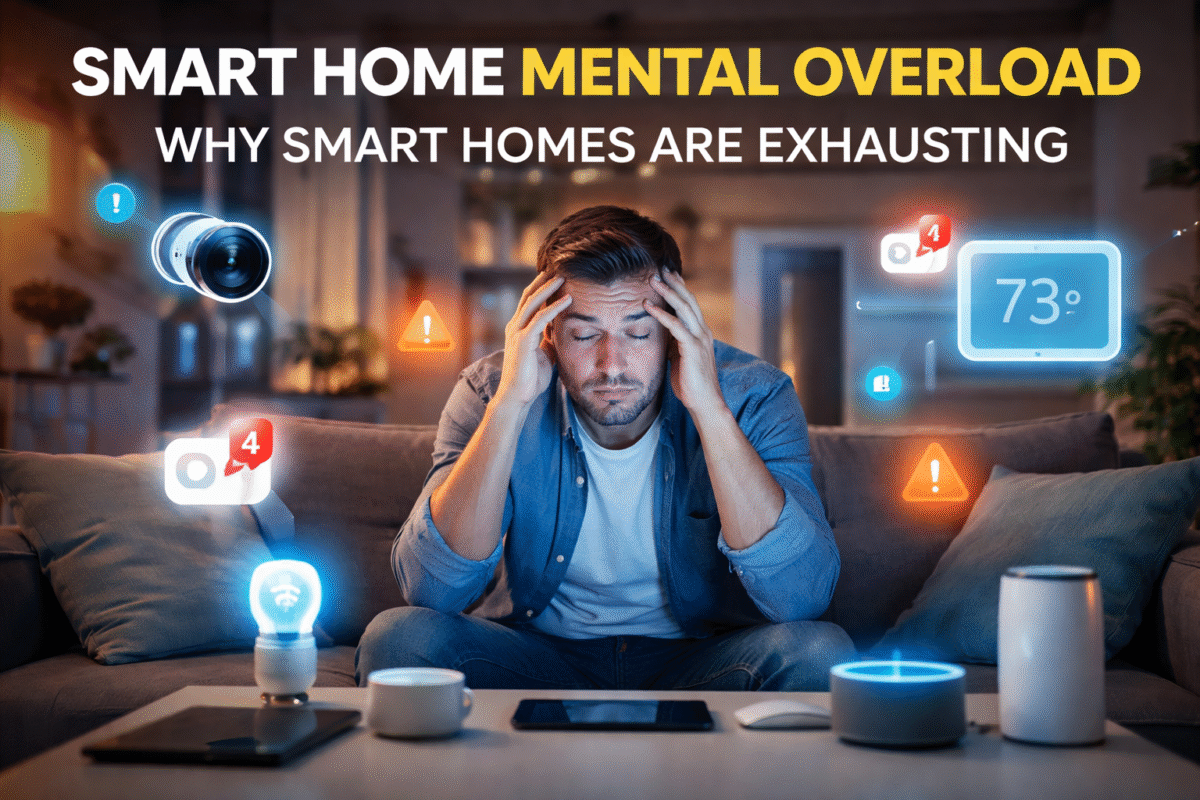
Smart Home Mental Overload: Why Smart Homes Are Mentally Exhausting (And How to Fix It)
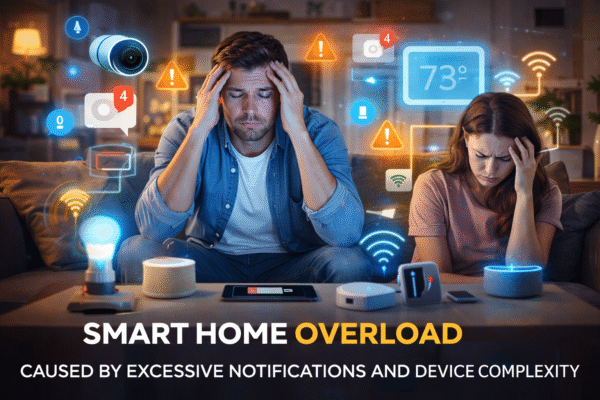
Smart home mental overload is becoming one of the most overlooked problems in modern households. What started as a promise of convenience, automation, and comfort has quietly evolved into a source of stress, confusion, and constant mental fatigue for many people.
If your smart home feels more overwhelming than helpful, you are not alone. And no — the solution is not buying another gadget.
What Is Smart Home Mental Overload?
Smart home mental overload happens when the number of connected devices, apps, automations, and notifications exceeds your brain’s ability to manage them comfortably. Instead of reducing friction in daily life, technology starts demanding attention.
This form of technology fatigue at home often shows up in subtle ways:
- Constant notifications from multiple smart home apps
- Automations that work “sometimes” but not always
- Confusion about which device controls what
- Feeling anxious when something stops working
- Needing to troubleshoot instead of relaxing
Ironically, smart homes are supposed to reduce cognitive load — yet many setups do the opposite.
This is closely related to what we explored in technology anxiety at home, where constant connectivity creates emotional pressure inside living spaces.
Why Smart Homes Are More Stressful Than We Expected
There are three main reasons why smart home stress has become so common in recent years.
1. Too Many Devices, Not Enough System Thinking
Most people build smart homes one product at a time. A smart plug here, a camera there, a new assistant next month. The result is a collection of devices that were never designed to work together as a single system.
This is why choosing devices intentionally matters. In our guide on how to choose smart home gadgets in 2026, we explain why ecosystem compatibility is more important than individual features.
2. App Overload and Interface Fatigue
Each brand wants you inside its own app. Over time, this leads to app overload — one app for lights, another for cameras, another for climate, and another for automation.
Every extra interface increases cognitive effort. Instead of feeling in control, users feel like managers of a small tech company inside their own home.
3. Automation Anxiety
Automations are powerful, but they introduce uncertainty. When something happens automatically, you must trust that it will always work correctly.
When it doesn’t, users experience stress — especially if they don’t understand why it failed. This uncertainty fuels smart home anxiety and breaks trust in the system.
The Hidden Psychological Cost of Smart Homes
Smart home mental overload is not just a technical issue — it’s psychological.
Studies on digital overload show that frequent micro-decisions (checking alerts, fixing errors, adjusting settings) drain mental energy. At home, this is especially damaging because the home is supposed to be a place of recovery.
Instead of resting, users remain in a low-level state of alertness.
This is why many people report feeling calmer in homes with fewer devices — even if those homes are technically “less smart.”
Why Buying More Gadgets Usually Makes It Worse
When something feels frustrating, the instinctive response is to replace or upgrade it. In smart homes, this often leads to more complexity, not less.
Adding new devices increases:
- Maintenance requirements
- Learning curves
- Potential points of failure
Even affordable devices — like those listed in best smart home gadgets under $100 — should be added intentionally, not impulsively.
Smart homes should evolve slowly, not reactively.
How to Reduce Smart Home Mental Overload Without Buying Anything
The good news: fixing smart home mental overload rarely requires new purchases.
1. Reduce Active Control Points
Aim to control most devices from one interface. This could be a single app, voice assistant, or automation dashboard.
If a device requires a separate app and adds little value, consider disabling or removing it.
2. Simplify Automations
Fewer automations that always work are better than many automations that sometimes fail.
If you don’t remember how an automation works, it’s too complex.
3. Design for Calm, Not Features
Every smart device should answer one question: Does this reduce mental effort?
If the answer is no, it doesn’t belong in your setup.
Smart Homes That Actually Feel Peaceful
Some of the calmest smart homes are not the most advanced ones. They are designed intentionally, with clear boundaries.
This is especially important for renters, where flexibility matters more than permanence. Our guide to smart home gadgets for renters shows how minimal setups can outperform complex ones.
Smart technology should disappear into the background — not dominate your attention.
Explore More Smart Home Insights
Follow Us for Smarter, Calmer Tech
Follow MadeMeBuyItNow for real, human-first tech insights:
How Smart Home Mental Overload Builds Up Over Time
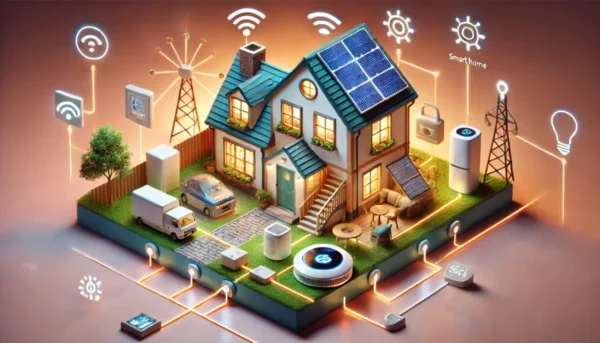
Smart home mental overload rarely appears overnight. It builds slowly, almost invisibly, as devices accumulate and daily interactions with technology become more frequent.
At first, smart devices feel exciting. Each new gadget solves a small problem. But over time, those “small wins” start stacking into a system that demands attention, maintenance, and decision-making.
The problem is not technology itself — it’s unmanaged complexity.
The Cognitive Load Problem Inside Smart Homes
Cognitive load refers to the amount of mental effort required to process information and make decisions. A well-designed smart home should reduce cognitive load. Instead, many setups increase it.
Every time you:
- Wonder which app controls a device
- Fix an automation that stopped working
- Check a notification that doesn’t matter
- Explain the system to a guest or family member
…you add to smart home mental overload.
This is especially common in households where devices were added without a long-term plan — something we often see when people skip structured decision-making, as explained in how I test smart home gadgets.
Why Families Feel Smart Home Stress Faster
Smart home stress multiplies when more than one person interacts with the system.
Different users have different expectations:
- Kids want things to “just work”
- Adults want reliability
- Guests want simplicity
When a system is too complex, the most tech-savvy person becomes the default “IT support.” This creates frustration and emotional fatigue.
Over time, this dynamic creates resistance to technology — even if the devices themselves are useful.
This is one of the reasons why smart home mental overload is now a common reason people abandon features or disable automations altogether.
The Notification Trap
Notifications are one of the biggest contributors to technology fatigue at home.
Smart homes generate alerts for:
- Motion detection
- Device status changes
- Connectivity issues
- Updates and suggestions
Individually, they seem harmless. Together, they fragment attention and create a constant sense of urgency.
A calm home should not feel like a control room.
If notifications don’t require action, they should not exist. This principle alone can dramatically reduce smart home mental overload.
When Automation Backfires
Automation is often marketed as the ultimate solution — but poorly designed automation increases stress.
Common problems include:
- Automations triggering at the wrong time
- Conflicting rules between devices
- Lack of transparency (why did this happen?)
Each failure chips away at trust. Once trust is lost, users start double-checking systems manually — defeating the purpose of automation.
This is why fewer, simpler automations outperform complex routines in the long run.
Minimalism as a Smart Home Strategy
Minimalism is not about having fewer devices — it’s about having fewer decisions.
A minimalist smart home:
- Uses one primary ecosystem
- Avoids overlapping device functions
- Prioritizes reliability over novelty
This approach is especially effective for renters and smaller spaces, as shown in smart home gadgets for renters.
Minimalism directly counteracts smart home mental overload by restoring clarity and control.
Environmental Design Matters More Than Tech
One overlooked factor is physical environment design.
Where devices are placed, how visible they are, and how often they demand interaction all influence mental comfort.
For example:
- Visible screens increase perceived complexity
- Hidden automation reduces mental friction
- Manual overrides provide psychological safety
Good smart homes feel intuitive — not impressive.
Related Smart Home Topics
Why This Matters for Long-Term Wellbeing
Homes shape behavior. When technology increases stress, it affects sleep, mood, and relationships.
Reducing smart home mental overload is not about rejecting innovation — it’s about designing systems that respect human limits.
In the next section, we’ll break down practical rules and checklists you can use to audit your smart home and remove unnecessary complexity — without spending money.
A Practical Audit to Reduce Smart Home Mental Overload
If your home feels mentally noisy, the solution is not buying new gadgets. The solution is auditing what you already have.
This section focuses on practical, non-technical steps to reduce smart home mental overload without deleting everything or starting from zero.
Step 1: Identify Mental Friction Points
Mental friction is any moment where technology interrupts your flow instead of supporting it.
Ask yourself:
- Which devices require frequent attention?
- Which apps I open only to fix problems?
- Which automations I no longer trust?
These are not technical failures — they are design failures.
Homes optimized for humans minimize friction, not features.
Step 2: Remove Redundant Control Layers
One of the biggest causes of smart home mental overload is redundancy.
Common examples include:
- Multiple apps controlling the same device
- Voice, app, button, and automation all doing the same thing
- Different brands solving the same problem
Redundancy increases decision fatigue. When too many options exist, users hesitate or disengage.
Choose one primary control method per device and disable the rest.
Step 3: Rebuild Automations Around Human Routines
Many smart homes fail because automations are built around technology capabilities, not human behavior.
Good automations answer one question:
“What problem does this remove from my day?”
If an automation does not remove effort, it adds mental overhead.
This philosophy aligns closely with how devices should be evaluated, as explained in how to choose smart home gadgets.
Step 4: Eliminate Silent Stressors
Silent stressors are devices that technically work but create subconscious tension.
Examples:
- Cameras you constantly check
- Locks you verify even when locked
- Sensors that trigger anxiety instead of safety
These devices increase smart home mental overload by keeping your brain in monitoring mode.
Technology should allow mental rest, not vigilance.
Step 5: Apply the “Less Than 3 Rule”
A powerful rule for sustainable smart homes:
No task should require more than 3 interactions.
If turning off lights, checking security, or managing routines requires more than three steps, the system is too complex.
Simplification improves usability and emotional comfort.
This is especially important for shared households and renters, where systems must remain intuitive.
Step 6: Redesign Notifications from Scratch
Do not “adjust” notifications. Reset them entirely.
Only allow alerts that:
- Require immediate action
- Indicate real risk
- Cannot be inferred visually
Everything else contributes to smart home mental overload.
A quiet home is a healthy home.
Step 7: Reframe Smart Home Success
Success is not how automated your home is.
Success is:
- How rarely you think about technology
- How little maintenance it needs
- How calm the environment feels
When technology disappears into the background, it is finally doing its job.
Explore Related Smart Home Content
Author
MadeMeBuyItNow Editorial Team
We test, analyze, and simplify smart home technology with a human-first approach. Our content focuses on usability, mental wellbeing, and long-term value — not hype.
Areas of expertise: smart home usability, consumer technology behavior, product decision frameworks.
Long-Term Strategies to Prevent Smart Home Mental Overload
Fixing smart home mental overload once is not enough. The real challenge is preventing it from coming back.
Most households fall into overload again because they continue adding devices without a long-term framework. This section focuses on sustainable strategies that protect mental clarity over time.
Adopt a “Mental Cost” Filter Before Buying New Devices
Every new device has a hidden cost beyond money: attention.
Before purchasing anything, ask:
- Will this reduce or increase my daily cognitive load?
- Will it add another app, notification, or dashboard?
- Will I still enjoy managing this in six months?
If the device increases mental management, it contributes to smart home mental overload, even if it works perfectly.
This mindset aligns with how responsible gadget selection should work, as explained in how we test smart home gadgets.
Limit Your Smart Home Ecosystem Intentionally
One of the strongest predictors of smart home mental overload is ecosystem fragmentation.
Multiple ecosystems mean:
- Different automation rules
- Different logic models
- Different update cycles
Instead of chasing features, commit to one primary ecosystem and accept its limitations.
Consistency reduces anxiety more than capability.
Redefine Automation Success Metrics
Most users measure automation success by how complex or advanced it is.
This is a mistake.
A better metric is invisibility.
If an automation constantly requires checking, fixing, or adjusting, it increases smart home mental overload.
The best automations are the ones you forget exist.
Design Technology-Free Recovery Zones
A healthy smart home still includes non-smart spaces.
Designate areas where:
- No notifications are allowed
- No screens are present
- No sensors demand attention
These recovery zones allow the brain to disengage from constant monitoring and decision-making.
This balance is essential for preventing long-term smart home mental overload.
Schedule Quarterly Smart Home Audits
Technology entropy is inevitable.
Devices accumulate, settings drift, and automations lose relevance.
A quarterly audit prevents overload by answering three questions:
- What do I no longer use?
- What causes friction?
- What can be removed?
Removing devices is as important as adding them.
Avoid Over-Automation of Emotional Decisions
Not everything should be automated.
Security, lighting, and energy management benefit from automation.
But emotional actions — like music, ambiance, or comfort — often create frustration when automated poorly.
Over-automation in these areas is a subtle contributor to smart home mental overload.
Leave room for human choice.
Educate All Household Members
A smart home is a shared environment.
If only one person understands how it works, mental overload increases for everyone else.
Simple documentation, shared routines, and basic explanations reduce confusion and dependency.
Clarity is a form of comfort.
Recognize Early Warning Signs of Overload
Smart home mental overload rarely appears suddenly.
Early warning signs include:
- Avoiding apps altogether
- Ignoring notifications
- Disabling features impulsively
- Feeling annoyed by “helpful” technology
When these signs appear, simplification is needed.
The Future of Smart Homes Is Cognitive Simplicity
The next evolution of smart homes will not be more devices.
It will be fewer decisions.
Homes that protect mental wellbeing will outperform homes that maximize automation.
Reducing smart home mental overload is not a downgrade — it is an upgrade.
Related Smart Home Resources
Final Thoughts: Building a Smart Home That Respects Your Mind
Smart home mental overload is not a failure of technology — it is a failure of design priorities.
For years, the smart home industry has focused on adding more features, more dashboards, and more automation layers. Very few conversations address how all of this impacts the human mind living inside those systems.
This article exists to change that perspective.
A Smart Home Should Reduce Thinking, Not Add to It
The true purpose of smart technology is mental relief.
If a device forces you to think about it daily, troubleshoot frequently, or adapt your behavior to accommodate it, then it is no longer serving you.
Over time, this friction accumulates into smart home mental overload.
The smartest homes are not the most connected — they are the most invisible.
Why This Topic Matters for the Future of Smart Living
As homes become more intelligent, the risk of mental overload increases.
Without intentional design, smart homes can:
- Increase anxiety
- Reduce comfort
- Create decision fatigue
- Cause technology avoidance
Recognizing smart home mental overload early allows homeowners to course-correct before frustration becomes burnout.
Editorial Responsibility in Smart Home Content
At MadeMeBuyItNow, we believe smart home content should educate — not pressure.
This is why our editorial focus includes:
- Real-life usability
- Mental impact of technology
- Long-term ownership experience
- Balanced perspectives
This philosophy is reflected in how we evaluate devices in our testing process.
Smart Homes Are Personal — Not Competitive
There is no universal “best” smart home.
What works for one household may overwhelm another.
Understanding your own tolerance for complexity is essential for preventing smart home mental overload.
A calm, simple system is always better than an impressive but exhausting one.
When Less Technology Creates More Value
Removing devices can be an upgrade.
Simplifying automations can improve reliability.
Reducing notifications can restore peace.
Smart living is not about accumulation — it is about intention.
Who This Guide Is For
This guide is designed for:
- Homeowners feeling overwhelmed by smart devices
- Renters experimenting with smart technology
- Families balancing convenience and mental health
- Anyone rethinking how technology fits into daily life
If this resonates with you, explore more practical guidance in our Tech Reviews & Buying Guides section.
Quick Takeaways
- Smart home mental overload is real and common
- More devices do not equal better living
- Simplicity protects mental clarity
- Technology should adapt to humans — not the other way around
Explore Related Smart Home Content
Follow Us for Practical Smart Living
We share practical, honest, and human-first smart home insights.
Final Note
Technology should support your life — not dominate it.
If your home feels stressful, it may not need more intelligence.
It may need more simplicity.
🔥 Join 120,000+ Smart Shoppers!
Get exclusive gadget deals, viral Amazon finds and tech reviews before they trend. Only the best — straight to your inbox every week 🚀