AI and Critical Thinking: Is Artificial Intelligence Making Us Worse at Thinking?
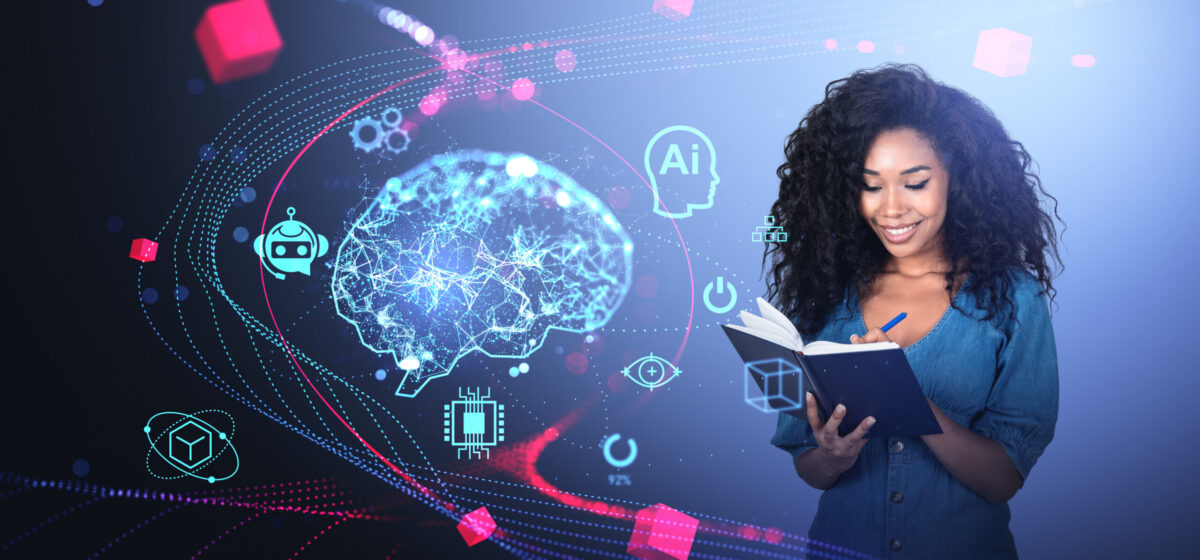
AI and critical thinking are now inseparable topics in 2026. From students using AI tools for essays to professionals relying on automation for daily tasks, artificial intelligence is quietly reshaping how we process information, solve problems, and even make decisions.
The real question isn’t whether AI is useful. It clearly is. The question is: what happens to human critical thinking when artificial intelligence does more of the thinking for us?
AI and Critical Thinking in Everyday Life
Not long ago, researching a topic meant comparing multiple sources, questioning contradictions, and forming an independent conclusion. Today, AI can summarize everything in seconds.
This shift in AI and critical thinking affects:
- How students learn
- How professionals write and analyze
- How consumers make buying decisions
- How we interpret news and trends
For example, in our article on why TikTok makes us buy things we don’t need, we explored how algorithms influence impulse decisions. AI works in a similar way — not by forcing us, but by reducing friction. When thinking becomes frictionless, critical thinking can quietly weaken.
Are We Outsourcing Too Much Mental Effort?
AI and critical thinking collide most clearly when we outsource problem-solving. Instead of asking, “How do I solve this?”, we now ask, “What does AI say?”
This changes the cognitive process:
- We skip the struggle phase.
- We accept structured answers without questioning assumptions.
- We move faster — but sometimes think less deeply.
Speed is not the same as depth. And critical thinking requires depth.
Even in technology ecosystems like those discussed in our iPhone 17 ecosystem review, convenience often replaces complexity. The smoother the system, the less effort required from the user. AI operates on the same principle.
Is AI Actually Making Us Worse at Critical Thinking?
It depends on how we use it.
AI and critical thinking are not enemies by default. In fact, artificial intelligence can enhance critical thinking when used as:
- A brainstorming partner
- A counter-argument generator
- A research assistant, not a conclusion machine
The danger appears when AI becomes a replacement rather than a tool.
Consider how quickly we rely on summaries instead of full articles, highlights instead of books, short clips instead of long-form analysis. In a world already saturated with information, AI accelerates that compression.
The Psychological Impact of AI and Critical Thinking
There’s also a subtle psychological shift happening. When AI consistently produces coherent, confident answers, it can create an illusion of certainty.
Critical thinking thrives on doubt. It requires questioning, comparing, and sometimes being uncomfortable with ambiguity.
But AI outputs are often presented as clean, structured, and decisive. That clarity can discourage deeper inquiry.
We’ve already seen how digital environments influence behavior in our discussion about why homes no longer feel restful. Constant stimulation changes how we experience space. Similarly, constant AI assistance changes how we experience thought.
AI and Critical Thinking in Education and Work
Education is where AI and critical thinking face their biggest test.
If students rely entirely on AI-generated answers, they may miss the development of analytical skills. However, if AI is used to challenge assumptions, generate opposing viewpoints, or refine arguments, it can strengthen intellectual growth.
In the workplace, AI increases efficiency. But long-term expertise still requires human judgment — something that cannot be fully automated.
Even when analyzing tech innovations like the Samsung Galaxy S26 release date leaks, understanding context, hype cycles, and market strategy requires interpretation beyond raw data.
How to Protect Critical Thinking in the Age of AI
If AI and critical thinking are going to coexist, we need intentional habits:
- Use AI for drafts, not final answers.
- Ask AI to provide multiple perspectives.
- Fact-check outputs independently.
- Reflect before accepting conclusions.
The future likely isn’t AI replacing critical thinking — it’s humans choosing how much effort they want to maintain.
Final Thoughts on AI and Critical Thinking
AI and critical thinking are entering a defining phase. Artificial intelligence is not inherently harmful to human thought. But like any powerful tool, its impact depends on how consciously we use it.
The real risk isn’t that AI makes us worse at thinking. The risk is that we stop practicing thinking deeply because faster answers feel good enough.
Follow Us
For more deep dives into technology, digital behavior, and smart consumer culture, explore our Tech Reviews & Buying Guides section and stay updated with our latest insights.
The Cognitive Shift: How AI and Critical Thinking Are Changing Everyday Decisions
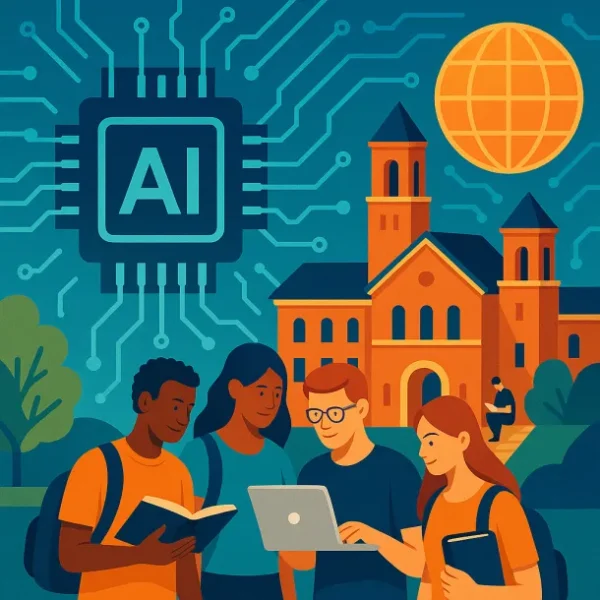
The relationship between AI and critical thinking is no longer theoretical — it’s happening in real time. Every search result, every AI-generated summary, every predictive suggestion is subtly reshaping how we evaluate information. Instead of analyzing deeply, many people now accept outputs as conclusions.
Artificial intelligence is designed to reduce friction. It summarizes, filters, predicts, and optimizes. But when friction disappears completely, so does part of the thinking process that builds strong reasoning skills. Critical thinking requires effort, questioning, comparison, and sometimes even discomfort.
This shift becomes especially visible when we compare digital habits today with behaviors from just five years ago. We no longer browse extensively — we scan. We don’t compare as much — we trust recommendations. And we rarely challenge algorithmic outputs.
In many ways, AI and critical thinking are now competing forces. One optimizes for speed. The other requires time.
From Search Engines to AI Answers
Traditional search engines forced users to evaluate multiple sources. You had to click, compare, and decide which perspective made sense. That process naturally strengthened critical thinking.
Today, AI-generated answers compress information into a single response. While this saves time, it removes the cognitive exercise of weighing multiple viewpoints.
This is similar to what we explored in Why TikTok Makes Us Buy Things We Don’t Need, where algorithms quietly influence decision-making without users fully realizing it.
When artificial intelligence becomes the primary filter between us and raw information, AI and critical thinking start to merge in a way that may reduce independent evaluation.
The Comfort of Instant Conclusions
There’s a psychological comfort in receiving fast, well-structured answers. AI systems present information confidently and clearly. That confidence can make responses feel authoritative — even when they shouldn’t be treated as final.
This dynamic mirrors broader digital fatigue trends, similar to the way modern environments no longer feel mentally restful, as discussed in Why Homes No Longer Feel Restful.
Our minds are adapting to environments where thinking is assisted, accelerated, and sometimes outsourced. The question isn’t whether AI is helpful — it clearly is. The deeper question is how AI and critical thinking can coexist without one weakening the other.
Are We Delegating Judgment?
Delegating tasks to technology isn’t new. Calculators changed math. GPS changed navigation. Spellcheck changed writing.
But AI systems go further — they assist with reasoning, summarizing, idea generation, and even creative thinking. That’s where the conversation about AI and critical thinking becomes more complex.
When artificial intelligence drafts arguments, generates insights, or suggests conclusions, users may skip the mental work of building ideas from scratch. Over time, this could reduce the mental stamina required for deep analysis.
At the same time, AI can also expand thinking by exposing users to broader perspectives faster than ever before. The outcome depends largely on how consciously we use these tools.
Stay Connected With Made Me Buy It Now
If you’re interested in how technology is shaping our habits, decisions, and daily life, follow us for deeper insights and trend analysis:
We publish weekly breakdowns on AI trends, consumer tech, and digital behavior shifts.
The Risk of Passive Consumption
One subtle danger in the AI and critical thinking debate is passive consumption. When answers are packaged cleanly and instantly, users may stop asking second-order questions:
- Who created this information?
- What perspective might be missing?
- Is there bias in the data?
- Are alternative viewpoints available?
Critical thinking thrives on curiosity. Artificial intelligence thrives on efficiency. The tension between the two defines this new era.
We see similar patterns in consumer tech ecosystems like the tightly integrated experience analyzed in iPhone 17 Ecosystem Review, where seamless design reduces decision friction — sometimes at the cost of user control.
Enhancement or Replacement?
The future of AI and critical thinking does not have to be adversarial. AI can serve as a thinking partner rather than a replacement.
Used intentionally, artificial intelligence can:
- Provide counterarguments
- Summarize complex research
- Generate alternative viewpoints
- Expose cognitive blind spots
The key lies in active engagement. Asking AI to challenge your thinking is very different from asking it to think for you.
As AI tools become embedded in smartphones, tablets, and operating systems — including devices like those discussed in our Samsung Galaxy S26 release coverage — the influence of artificial intelligence on cognition will only grow.
The central question remains: will AI and critical thinking evolve together, or will convenience slowly replace cognitive depth?
The Future of AI and Critical Thinking: Adaptation, Awareness, and Cognitive Responsibility
The long-term relationship between AI and critical thinking will not be determined by technology alone. It will be shaped by how individuals choose to interact with artificial intelligence on a daily basis. The future is not about whether AI becomes more powerful — it unquestionably will. The real question is whether human cognitive habits evolve with equal strength.
Artificial intelligence is rapidly integrating into search engines, productivity tools, smartphones, educational platforms, and even creative software. As these systems become more intuitive and predictive, users will rely on them more frequently for decision-making support. This is where AI and critical thinking must develop in balance.
Education in the Age of Artificial Intelligence
One of the most significant shifts will occur in education. Students now have instant access to AI systems capable of summarizing research papers, solving equations, drafting essays, and explaining complex theories. While this access democratizes knowledge, it also changes how cognitive effort is distributed.
If learners depend entirely on AI-generated explanations without analyzing underlying logic, the development of independent reasoning may weaken. However, if AI is used as a tool to compare interpretations, test arguments, and simulate counterpoints, AI and critical thinking can reinforce one another.
Educational institutions will increasingly face a challenge: teaching students how to think critically in collaboration with artificial intelligence rather than in competition with it.
Work, Productivity, and Cognitive Outsourcing
In professional environments, AI tools are already automating writing, coding, data analysis, customer service, and strategic forecasting. This automation increases efficiency but also raises an important concern — are we outsourcing judgment?
When artificial intelligence proposes business strategies or generates analytical reports, professionals must still apply critical evaluation. Blind acceptance of AI outputs can lead to errors amplified at scale.
The healthiest future scenario for AI and critical thinking involves augmentation, not replacement. AI should accelerate data processing while humans remain responsible for ethical reasoning, contextual awareness, and long-term judgment.
Algorithmic Influence and Information Bias
Another factor shaping the future of AI and critical thinking is algorithmic bias. AI systems are trained on data sets that may contain cultural, political, or economic biases. Without critical examination, users may internalize these biases unknowingly.
Strong critical thinking skills help individuals recognize patterns, question assumptions, and verify claims across multiple sources. In a world increasingly mediated by artificial intelligence, this skill becomes not just useful — but essential.
Search behavior itself is evolving. Instead of exploring multiple links, users now often accept a single AI-generated summary. While convenient, this behavior reduces exposure to diverse viewpoints and weakens comparative reasoning.
Digital Minimalism and Cognitive Health
Interestingly, some early signs suggest a countertrend emerging. As AI tools become more dominant, certain users are consciously choosing slower information consumption. Digital minimalism, intentional device use, and long-form reading are gaining renewed interest.
This shift reflects an awareness that AI and critical thinking must remain in equilibrium. Cognitive health depends on mental challenge, reflection, and exposure to complexity.
The human brain strengthens through effort. When artificial intelligence removes all friction, the opportunity for intellectual growth may decrease. But when AI is used to explore deeper questions rather than bypass them, it can actually expand cognitive range.
Practical Ways to Strengthen Critical Thinking in an AI World
To ensure that AI and critical thinking evolve together, individuals can adopt simple but powerful habits:
- Ask AI for opposing viewpoints before forming conclusions.
- Verify important information through independent sources.
- Use AI summaries as starting points — not final answers.
- Engage in long-form reading without algorithmic filtering.
- Reflect before acting on AI-generated recommendations.
These behaviors maintain active cognitive engagement while still benefiting from technological efficiency.
The Balance Between Speed and Depth
Artificial intelligence optimizes for speed. Critical thinking requires depth. The future belongs to those who can manage both.
If society chooses speed without reflection, the quality of reasoning may decline. If society rejects AI entirely, it risks inefficiency and lost innovation. The sustainable path forward recognizes that AI and critical thinking are not enemies — they are forces that must be aligned deliberately.
As AI becomes embedded in upcoming devices, operating systems, and digital ecosystems, the impact on cognition will continue to grow. What remains within human control is the intention behind usage.
Artificial intelligence can answer questions. Only humans can decide which questions are worth asking.
Final Thoughts: AI and Critical Thinking in the Next Decade
Over the next ten years, the intersection of AI and critical thinking will define not just how we work, but how we perceive knowledge itself. The convenience of automated insight must not replace intellectual responsibility.
The strongest minds of the future will not be those who reject AI, nor those who depend on it blindly. They will be those who understand its limitations, challenge its outputs, and integrate its capabilities into disciplined reasoning.
Artificial intelligence is a powerful cognitive amplifier. Whether it amplifies shallow thinking or deep analysis depends entirely on human awareness.
Ultimately, the evolution of AI and critical thinking is not a technological issue — it is a behavioral one. The tools are here. The responsibility remains ours.
About the Author
Elias Chicas is the founder and lead writer at MadeMeBuyItNow.com, where he explores consumer technology, digital trends, and the psychology behind modern buying decisions.
His work focuses on artificial intelligence, emerging tech ecosystems, and how innovation influences behavior, productivity, and critical thinking in everyday life.
🔥 Join 120,000+ Smart Shoppers!
Get exclusive gadget deals, viral Amazon finds and tech reviews before they trend. Only the best — straight to your inbox every week 🚀